Full Mouth Dental Implants (All-on-4) in Lisle, IL
Missing all or most of your teeth, or worn out by dentures that never seem to fit right? Implant-supported restorations give you a permanent, beautiful smile that stays put in your mouth. At Brammeier Family Dental, Drs. Brammeier and Ericson design and fit full-arch implant bridges and implant-supported overdentures that look, feel, and function like natural teeth, coordinating with a trusted implant surgeon who handles the surgical placement. Enjoy the foods you love, speak with confidence, and smile without a second thought.
What it is
A complete set of replacement teeth carried by strategically placed dental implants, available either as a fixed bridge permanently attached to the implants or as a removable overdenture that snaps securely into place.
Who it's for
Patients who have lost all or most of their teeth, those whose teeth are failing, or anyone fed up with loose, uncomfortable traditional dentures and ready for a stable, permanent solution.
How we help
Custom treatment planning, coordination with a trusted implant surgeon for placement, and custom-designed restorations fitted in our Lisle office, since every patient's needs and jawbone are different.
Worn out by dentures? Implant-supported teeth stay in your mouth and feel completely natural.
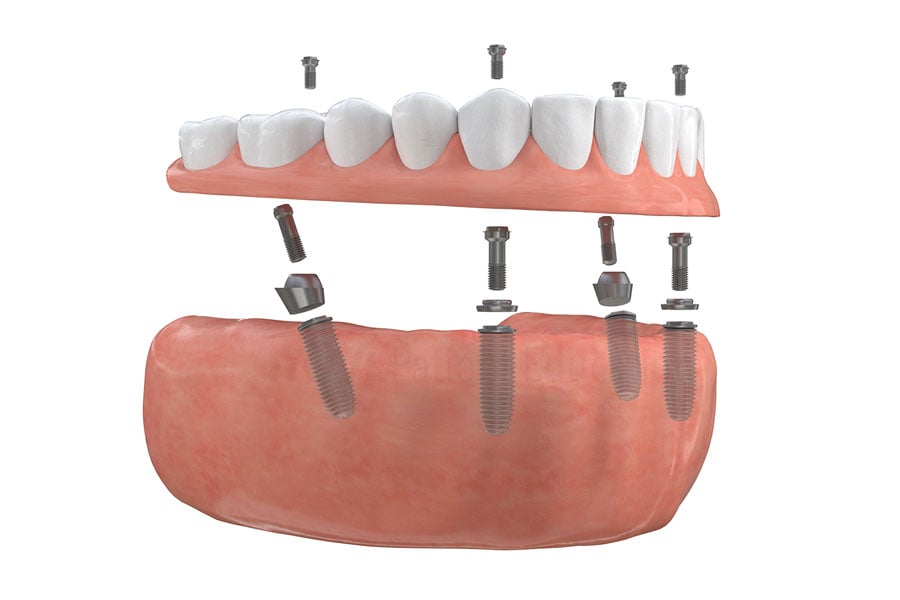
Full-Arch Implant Bridge
- A full set of teeth fixed permanently to 4–6 dental implants per arch
- Never comes out, with nothing to remove, no adhesives, and no slipping
- Bite and chew at full power on any food, with no dietary restrictions
- Keeps the jawbone healthy by stimulating it through the implant posts
- Designed to match ideal tooth shape, size, and color for a completely natural look
- Depending on the technique, often called "All-on-4" or "teeth in a day"
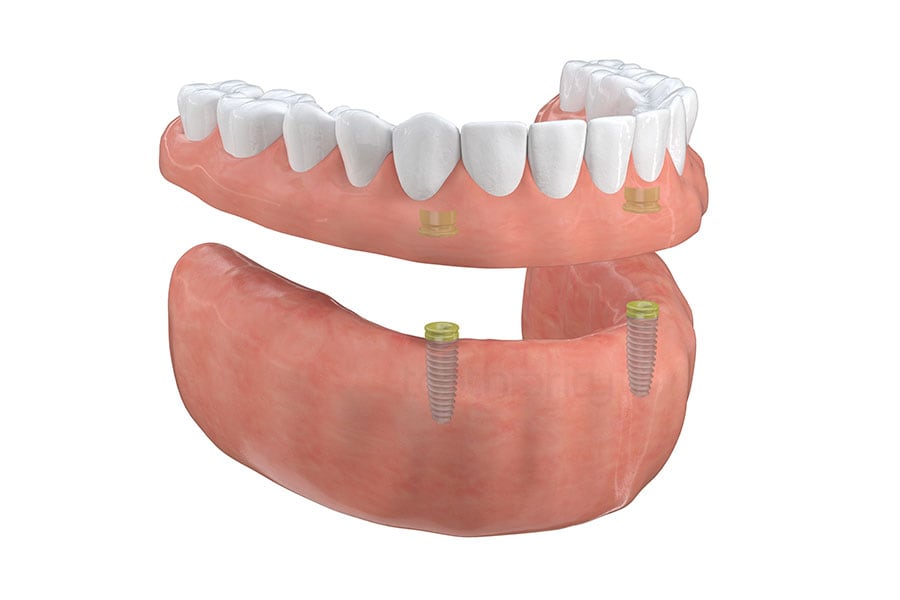
Implant-Supported Overdentures
- A full denture that snaps securely onto dental implants for added stability and comfort
- Comes out at home for cleaning and maintenance, then clicks right back into place
- Far steadier than a traditional denture, with no slipping, rocking, or adhesives
- Lets you eat, drink, and speak with confidence all day long
- Drs. Brammeier and Ericson fits a supporting structure onto the implants so your overdentures click securely into place
- A more budget-friendly alternative to a full-arch fixed bridge
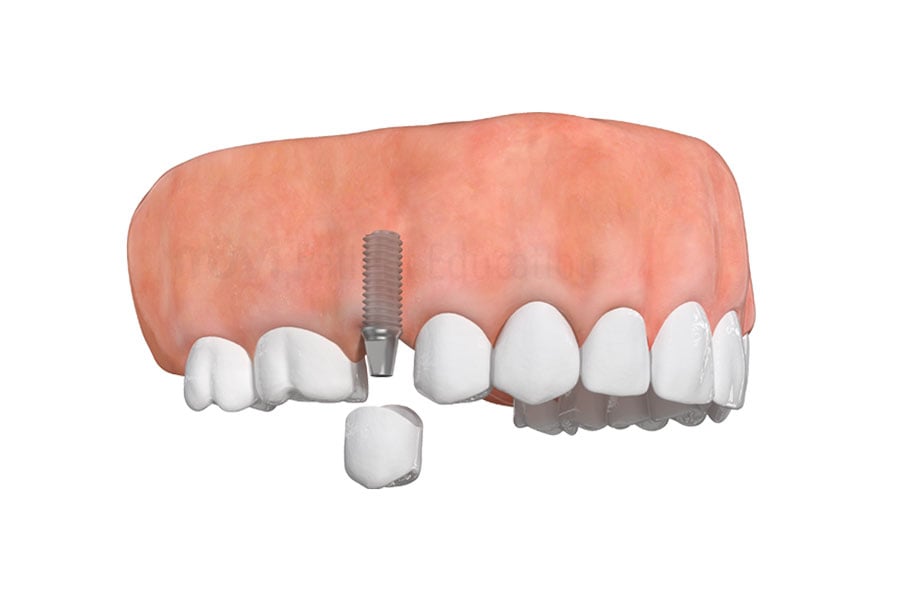
Implants vs. Traditional Dentures
- Bone preservation: Implants stimulate the jawbone and prevent the deterioration that sets in beneath traditional dentures
- Stability: Anchored to the bone, implant restorations never slip, shift, or rely on messy adhesives
- Comfort: No sore spots from loose dentures rubbing against the gums
- Eating: Bite and chew normally, whereas traditional dentures reduce chewing capacity by up to 75%
- Taste: Because implant bridges leave the roof of your mouth uncovered, you can fully taste your food
- Appearance: Implants head off the sunken, collapsed look that develops as bone melts away under traditional dentures
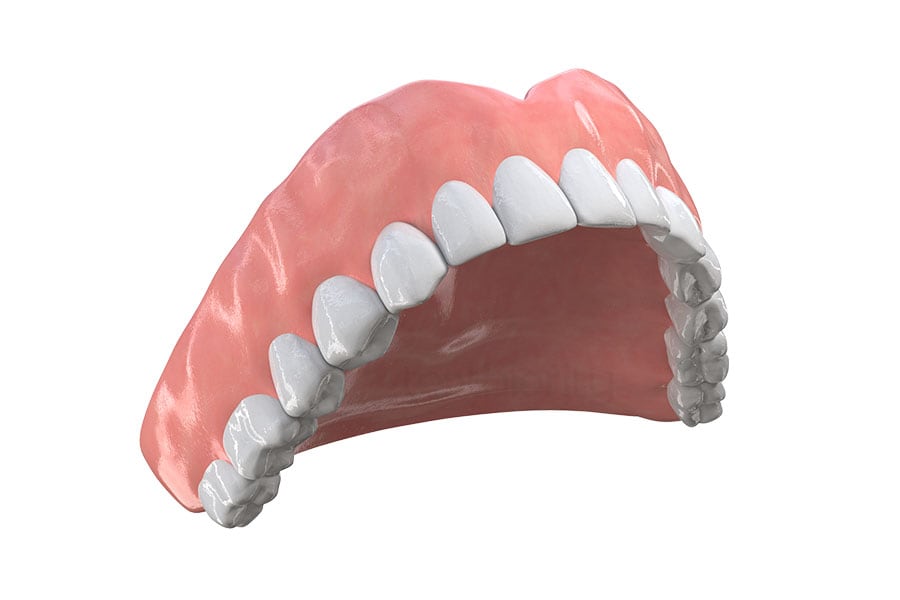
Problems with Traditional Dentures
- With no tooth roots present, the jawbone resorbs and shrinks, so dentures loosen over time
- As the bone changes, traditional dentures need constant adjustment and eventual replacement
- Sticky adhesives are often needed just to hold dentures in place
- Many patients struggle to eat, speak, and taste food
- Bone loss brings on a collapsed, aged facial appearance
- Implant-supported restorations resolve all of this by replacing the root as well as the crown
Dental implants are the one tooth replacement that preserves your jawbone and maintains your facial structure.
What to Expect at Your Visit
Visit Steps
- Comprehensive evaluation: Drs. Brammeier and Ericson study your mouth and jawbone with digital X-rays and CT scans
- Custom treatment plan: We map out a personalized plan around your bone density, the number of implants needed, and the restoration type
- Implant placement: A trusted implant surgeon we coordinate with places your titanium implants, with sedation options available for comfort
- Healing: Over several months the implants integrate with the jawbone, and temporary teeth may be provided in the meantime
- Final restoration: Your custom bridge or overdenture is fitted or permanently placed
Helpful Tips
- No two treatment plans are alike, since the number of implants, healing time, and cost all depend on your specific situation
- Where significant bone loss has occurred, bone grafting may come before implant placement, and we coordinate it with a trusted oral surgeon when needed
- Temporary teeth can be supplied during the healing period so you're never without a smile
- Follow every post-surgical care instruction to support successful healing
- Keep up excellent oral hygiene around your implant restorations
- Ask about our flexible financing options to keep full mouth restoration affordable
Frequently Asked Questions
Our role is the restorative side of your care: planning your treatment and designing and fitting the implant bridge or overdenture that completes your smile. A trusted implant surgeon we partner with performs the surgical placement of the dental implants themselves.
This team approach means your care is coordinated between specialists who each focus on what they do best, all working toward the same result. The surgeon handles the surgery, and your final implant-supported restoration is designed and fitted right here in our Lisle office, so you always know who is caring for you at each stage.
Most full-arch restorations call for 4 to 6 dental implants per jaw. That range works because the implants are positioned strategically to spread the load of a full set of teeth, so an entire arch can be supported without needing an implant for every individual tooth.
The exact number for you comes down to your jawbone density, the placement of the implants, and whether you choose a fixed bridge or a removable overdenture. Drs. Brammeier and Ericson will settle on the optimal number during your consultation, using CT imaging to map your bone and plan precise implant positions.
Sometimes, yes. Certain techniques, often called teeth in a day, allow a temporary set of teeth to be attached to the dental implants on the same day the implants are surgically placed. That means you can leave with a functional, non-removable smile rather than going without teeth during healing.
It is important to understand that these same-day teeth are temporary. Your permanent, final restoration is placed after the implants have fully integrated with the jawbone, typically 3 to 6 months later. Whether same-day teeth are an option depends on your bone quality and overall plan, which we confirm during your evaluation.
Both are excellent implant-supported options, and the right one depends on your priorities. A fixed full-arch bridge stays permanently attached to the implants and never comes out, which makes it the closest thing to having natural teeth again. An implant-supported overdenture snaps securely onto the implants but can be removed at home for cleaning, which some patients find easier to maintain and more budget-friendly.
Cost, jawbone density, how much stability you want, and personal preference all play into the decision. There is no single right answer, so Drs. Brammeier and Ericson will walk you through the trade-offs of each and help you choose the restoration that best fits your lifestyle and goals.
In most cases, treatment is still possible. Years of wearing traditional dentures often lead to significant jawbone loss, because the bone gradually resorbs when it is no longer stimulated by tooth roots. Even so, implant treatment is usually still an option, and it is one of the best ways to stop that bone loss from continuing.
Where the bone has thinned too much to support implants directly, bone grafting (performed by a trusted oral surgeon we partner with) can rebuild the jawbone into a solid foundation first. In other cases, strategic implant placement can work with the bone you still have. A CT scan during your consultation tells us exactly what your jaw needs before we finalize your implant plan.
From implant placement to the final restoration, full mouth restoration typically takes 4 to 8 months. Most of that time is healing, during which the dental implants fuse with your jawbone in a process called osseointegration. That integration is what gives implant-supported teeth their lifelong stability, so it is not a stage that can be rushed.
If bone grafting is needed first, the total timeline may stretch to 9 to 12 months, since the graft has to heal before implants can be placed. Throughout the process, temporary teeth are provided during healing, so you are never without a smile while you wait for your permanent restoration.
The cost of full mouth restoration swings widely with the number of dental implants involved, whether you choose a fixed bridge or a removable overdenture, and whether bone grafting is needed first. Because these variables differ so much from patient to patient, a personalized treatment plan is the only way to arrive at an accurate figure.
The investment is significant, but implant-supported teeth are built to last a lifetime with proper care, which often makes them more cost-effective over the long run than decades of relining and replacing traditional dentures. At our Lisle office we provide a detailed estimate up front and offer flexible financing options to make treatment more manageable.
Caring for implant-supported teeth is straightforward, and the routine depends slightly on which restoration you have:
- Fixed bridge: Clean it much like natural teeth, brushing twice daily and using specialized floss, interdental brushes, or a water flosser to clean around and under the bridge where it meets the gums
- Overdenture: Remove it nightly to clean both the denture and the attachments, and brush your gums and any implant posts before reinserting it
- Both types: Keep up regular dental checkups and cleanings so we can monitor the implants and surrounding gum tissue
Keeping the gum tissue around your implants clean and healthy is the single most important thing you can do to help your implant-supported teeth last for the long term.
Put loose dentures behind you for good. Schedule your full mouth restoration consultation today.