Emergency Dentist in Lisle, IL
A dental emergency rarely gives you advance notice, and the longer you put off care, the more damage your mouth can take on. Drs. Brammeier and Ericson and the team at Brammeier Family Dental have handled a wide range of oral injuries and tooth pain, and emergency appointments are open to current and new patients alike. Call us immediately and we will get you in quickly.

In the middle of a dental emergency? Call us right away at (630) 983-8700. Same-day emergency appointments are available. Head to the nearest emergency room instead if you have uncontrolled bleeding, difficulty breathing, or facial trauma affecting your airway.
What we treat
Urgent dental problems of every kind: severe toothaches, knocked-out teeth, broken or cracked teeth, lost fillings or crowns, abscesses, swelling, and traumatic injuries.
Who can come
Anyone facing a dental emergency, whether or not you have been here before. Current and new patients are both welcome, so existing-patient status is not required for urgent care.
How we help
Same-day emergency appointments backed by digital imaging, effective pain relief, and the full range of emergency treatments, from root canals to extractions to trauma repair.
There is no reason to sit with dental pain. Call us now and we'll see you today.
Common Dental Emergencies We Treat
Toothaches
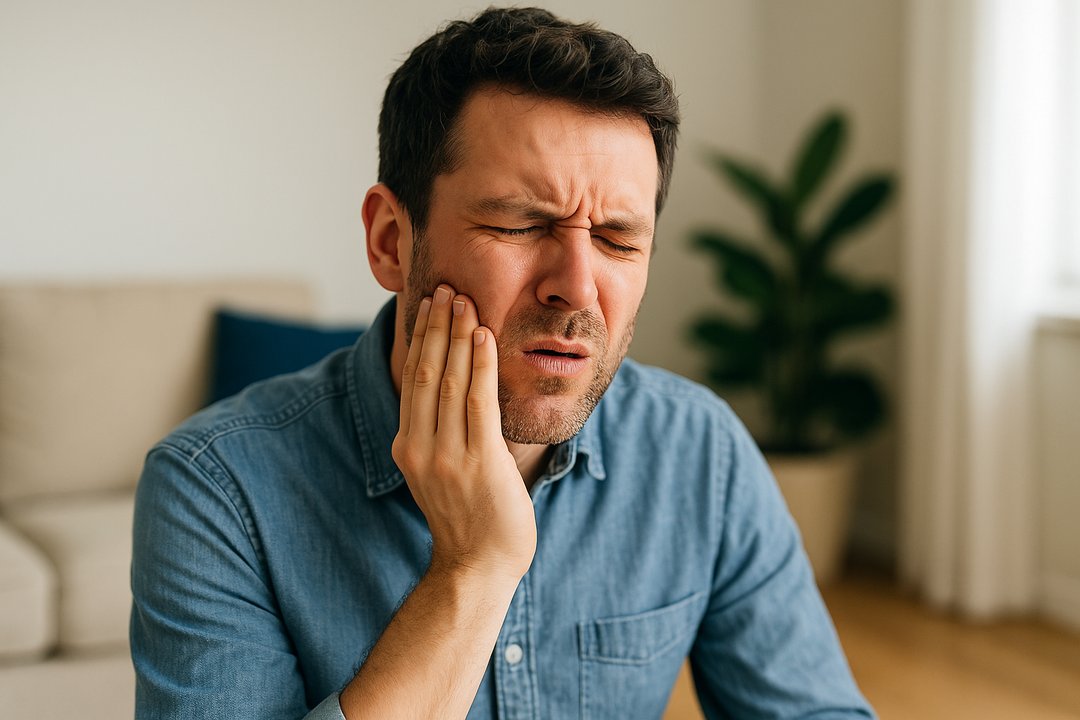
A toothache can be flat-out debilitating when it hits. Severe tooth pain usually means an infection, a deep cavity, or a cracked tooth that needs attention now. We track down the cause and deliver effective pain relief, often within the same visit.


When a Root Canal Is Needed
Lingering hot or cold sensitivity, severe throbbing, or swelling can mean infection has reached the tooth's nerve, the point at which root canal therapy is needed to save the tooth. Drs. Brammeier and Ericson can see you on short notice to find the cause, manage the pain, and coordinate a referral to a trusted endodontist when a root canal is the right next step.
When a Tooth Is Damaged, Broken, or Lost
Tooth Extractions
Once a tooth is too damaged to save, removing it stops the pain right away and keeps infection from spreading. Modern anesthetics and Drs. Brammeier and Ericson's experience have made extractions far more comfortable than they used to be, and many patients report little or no discomfort.

Traumatic Injuries
A tooth that has been knocked out, dislodged, or pushed partway in requires immediate attention. Drs. Brammeier and Ericson are trained to reposition, stabilize, and treat injured teeth, and acting quickly often makes the difference in saving one.
Cracked Teeth
Cracks and fractures may appear all at once from trauma or build slowly under years of grinding and biting force. Some are agonizing while others cause no pain at all. Drs. Brammeier and Ericson pinpoint where the crack sits and how serious it is, then recommend the best course of action. A crown placed at our office saves many of them, sometimes following a referral for root canal therapy.

Time matters in a dental emergency. Call us now and get same-day care.
What to Do in a Dental Emergency
Knocked-Out Tooth
- Locate the tooth and hold it by the crown (top), never the root
- If it is dirty, rinse the tooth gently with water, but do not scrub or remove tissue
- Slip the tooth back into its socket if you can, biting on a cloth to hold it in place
- If reinserting it isn't possible, keep the tooth moist in milk or saliva
- Reach our office within 30 minutes, since arriving sooner raises the chance of saving the tooth
Severe Toothache or Swelling
- Swish with warm salt water to help cut down on bacteria
- Take over-the-counter pain relievers as directed, and never set aspirin directly on the gum
- Press a cold compress to the outside of your cheek to bring down swelling
- Keep heat away from the affected area
- Call us immediately, since pain and swelling together often signal an infection that needs prompt treatment
Frequently Asked Questions
A dental emergency is any problem that needs prompt attention to relieve serious pain, stop bleeding, save a tooth, or keep an infection from spreading. The most common ones include severe or worsening tooth pain, a knocked-out or badly broken tooth, a lost filling or crown that leaves sensitive tooth structure exposed, facial swelling, and injuries to the mouth from an accident or fall.
When in doubt, call us. It is far better to describe what is happening and let us help you decide than to wait and risk a small problem turning into a bigger one; we would always rather see you and rule something out. A few situations, such as uncontrolled bleeding or swelling that affects your breathing, call for a hospital emergency room, but for anything centered on the teeth and gums, our emergency dental care is the faster, more specialized choice.
Yes. You do not need to be an established patient to get emergency dental care here; our doors are open to both current and new patients when an urgent problem strikes. Dental emergencies do not wait for convenient timing, and neither should you.
If you are dealing with severe pain, a broken or knocked-out tooth, or swelling, call our Lisle office right away and we will work to fit you in as quickly as we can, often the same day. When you call, describe your symptoms so we can prioritize your visit and guide you on what to do in the meantime.
A knocked-out tooth is one of the few true dental emergencies where minutes genuinely matter, and the right first steps can decide whether it can be saved. Handle it carefully and act quickly:
- Pick the tooth up by the crown, the part you chew with, and never touch the root.
- If it is dirty, rinse it gently with water. Do not scrub it or remove any attached tissue.
- If you can, ease it back into its socket and hold it there by biting gently on a clean cloth.
- If you cannot reseat it, keep it moist in a cup of milk or tucked inside your cheek.
- Call us right away and come straight in. Reaching our office within 30 minutes gives you the best chance of saving the tooth.
Speed matters this much because the delicate cells on the root begin to dry out and die once the tooth leaves the socket. Keeping it moist and getting emergency dental care fast is what preserves the chance of putting it back and having it survive.
Often, yes, though it depends on the type, location, and severity of the crack. A shallow crack in the enamel may need little more than monitoring or a simple restoration, while a crack that reaches the nerve frequently calls for root canal therapy, which we coordinate with a trusted endodontist, followed by a crown placed at our office to hold the tooth together.
Some cracks, unfortunately, run too deep to repair. A fracture that extends below the bone line typically means the tooth cannot be saved and extraction is the better path. The only way to know for certain is to be seen promptly, since a crack left alone tends to worsen. Drs. Brammeier and Ericson will evaluate exactly where the crack sits, explain what they find, and walk you through your options.
While you wait to be seen, a few simple measures can take the edge off. Use an over-the-counter pain reliever as directed, rinse gently with warm salt water to soothe the area and reduce bacteria, and hold a cold compress against the outside of your cheek for fifteen minutes at a time to ease pain and swelling. Sticking to lukewarm foods and avoiding very hot or cold items can also help if the tooth is sensitive.
One important caution: never place aspirin or any pain tablet directly against the gum or tooth. It does not work that way, and the acid can actually burn the soft tissue. These steps are meant to keep you comfortable in the meantime, not to replace treatment, so still call us so we can find and fix the underlying cause with proper emergency dental care.
Most dental problems, including toothaches, broken teeth, and infections, are handled better and faster in a dental office than in a hospital emergency room, since an ER can usually only offer pain medication or antibiotics rather than actually treating the tooth. For those situations, calling us is the right move.
There are, however, clear exceptions where the ER should come first. Go straight to the emergency room for bleeding that will not stop with steady pressure, facial swelling that affects your breathing or swallowing, a suspected broken jaw, or trauma that involves other parts of the body. In those cases the priority is your overall safety, and once you are stable we can follow up on any dental treatment your mouth still needs.
Dental pain shouldn't have to wait. Call (630) 983-8700 now for emergency care.