What Botox for TMJ Treats
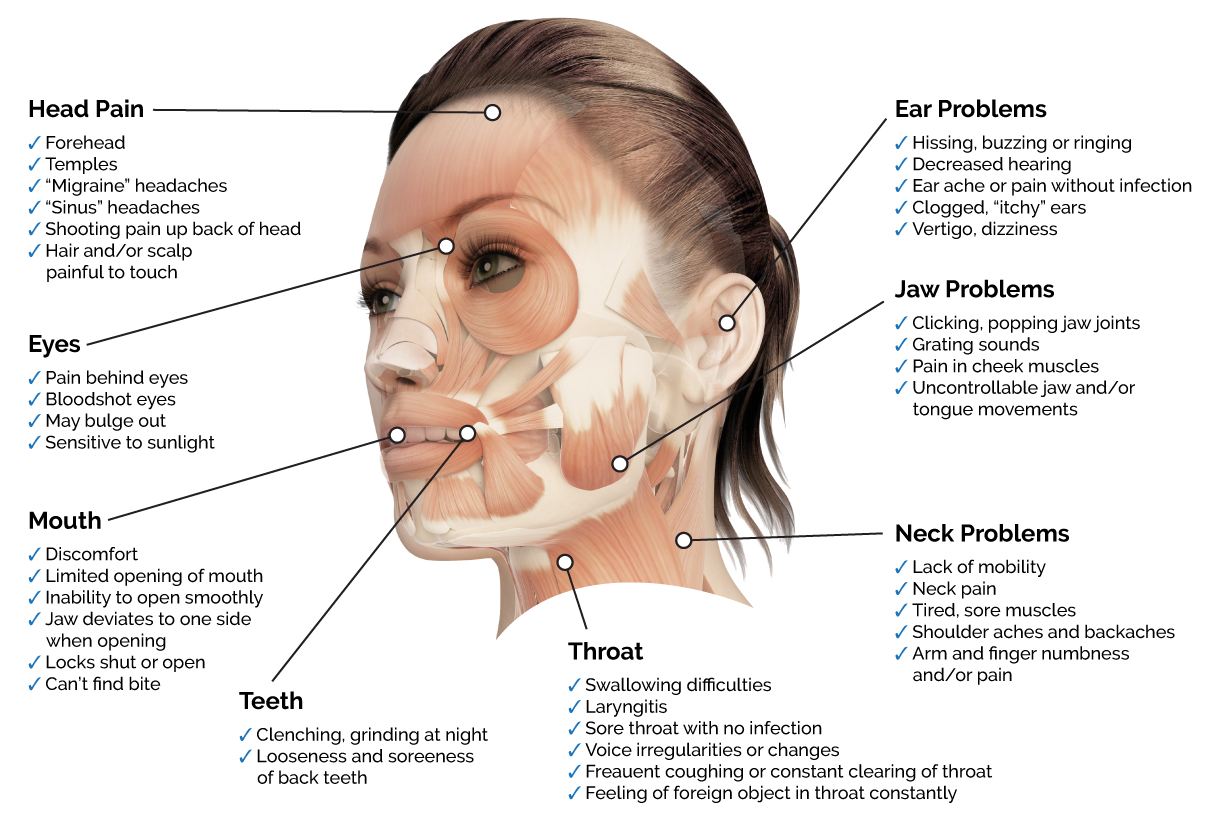
Jaw muscles that never fully switch off make trouble well beyond the jaw, reaching your head, your teeth, and even your sleep. Since Botox quiets those muscles at the source, it can relieve a surprisingly wide range of related symptoms. Here are the ones it helps most often.
Symptoms Botox for TMJ Can Relieve
Jaw Pain & Tightness
Muscles that clench all night long leave the jaw sore, tired, or aching, usually at its worst first thing in the morning.
Clenching & Grinding
Ongoing bruxism that keeps the jaw muscles overworked while it wears down teeth and cracks fillings.
Tension Headaches
Dull, band-like headaches around the temples that often trace back to overactive jaw muscles.
Migraines
In some patients, easing the jaw and temple muscles reduces how often migraines strike and how intense they feel.
Ear & Temple Pressure
Facial tension along with aching around the ears or temples, a frequent companion of muscle-driven TMD.
A Heavy, Square Jawline
Years of clenching can enlarge the jaw muscles into a bulky jawline, one that softens as the muscle relaxes.
See your own symptoms on this list? A consultation can confirm whether they're muscle-driven and a fit for Botox.
Could Your Symptoms Be Muscle-Driven?
Signs That Point to the Muscle
- Your jaw feels sore, tired, or stiff when you wake
- You notice yourself clenching during the day, especially when stressed
- Your partner hears you grinding through the night
- Tension headaches around the temples come on frequently
- Your teeth are flattening, chipping, or showing worn edges
- Your jaw muscles feel enlarged, or your jawline looks square
What's Behind It
- Stress & tension: the leading driver behind clenching and grinding
- Bruxism: habitual grinding that often happens in your sleep, beyond your control
- Bite imbalance: an uneven bite that forces the muscles to work harder than they should
- Muscle overdevelopment: years of clenching build up the masseter, which feeds the cycle
- Habit & posture: gum chewing, nail biting, and jaw posture that keep the muscles engaged
When the Cause Is More Than Muscle
Botox is powerful against muscle-driven pain, yet not every jaw problem begins in the muscle.
We Diagnose First
A joint that clicks, locks, or is structurally damaged may call for a different approach, so Drs. Brammeier and Ericson examine the joint, muscles, and bite before recommending any treatment.
Often a Combination
For many patients the best results come from Botox alongside a custom night guard or bite adjustment, with each one targeting a different part of the problem.
The Full Menu
Night guards, splint therapy, bite adjustment, and at-home jaw relief are all detailed on our complete TMJ/TMD page.
Find Out What's Driving Your Jaw Pain
A short evaluation with Dr. Lauren Brammeier can pinpoint what is behind the pain and whether Botox is your best route to relief. Begin with our quick self-assessment.